Brake fluid: how often to change it and why it’s a safety matter
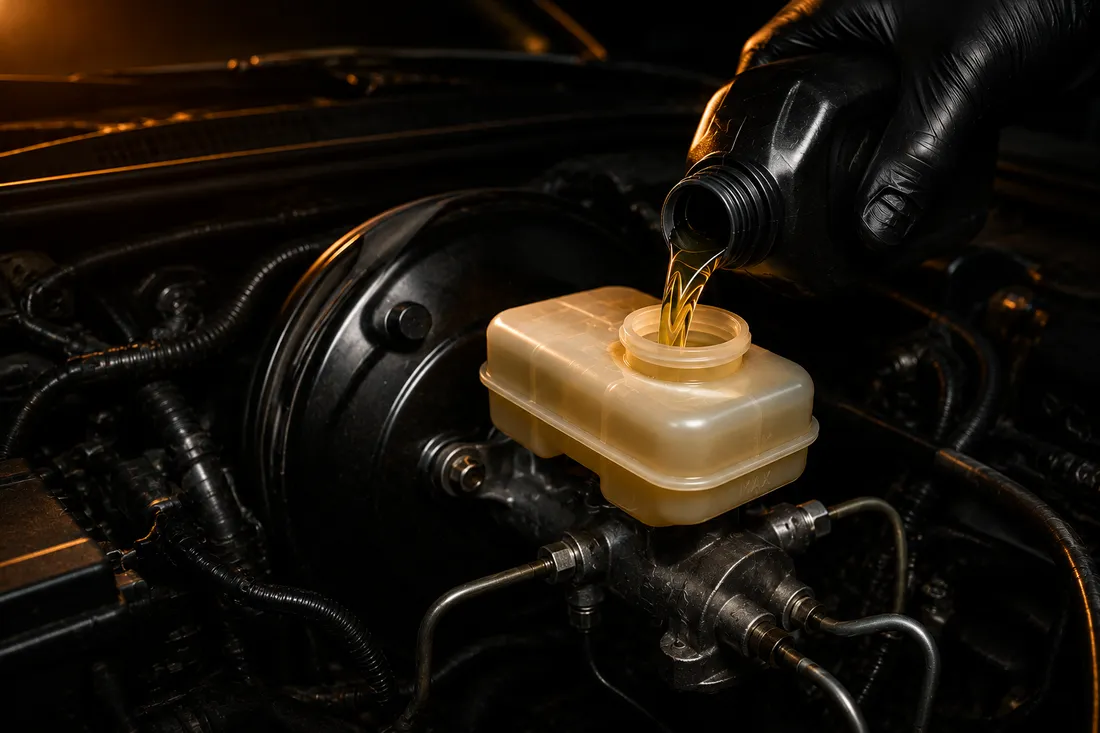
Of all the car’s fluids, brake fluid is the one that most directly protects your life. And yet it’s one of the most forgotten.
Why it’s changed by time, not mileage
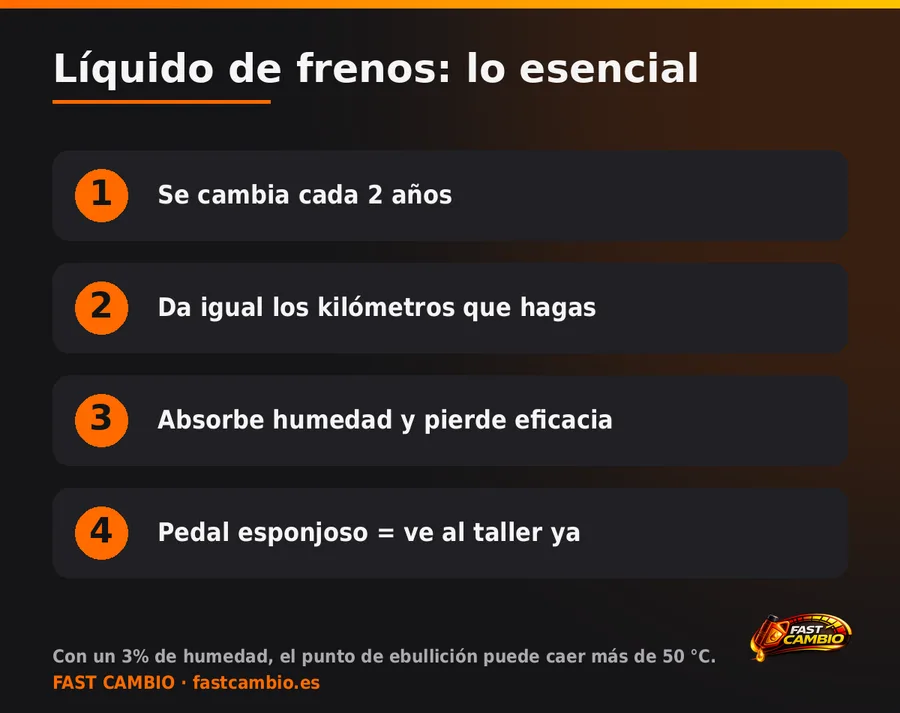
Brake fluid is hygroscopic: it absorbs moisture from the air even when the car sits still. That moisture lowers its boiling point.
That’s why the interval is time-based, usually every 2 years. It doesn’t matter whether you drive a lot or a little: moisture gets in either way. Book your brake fluid change and take the chance to look at the coolant.
The real danger: the pedal that sinks
When you brake hard and repeatedly (a long descent, an emergency), moisture-laden fluid can boil. Vapour bubbles form and the pedal drops to the floor without braking.
It’s exactly when you need the brakes most. That’s why it’s not a “cosmetic” service: it’s pure safety.
Signs it’s already due
Don’t wait for the scare:
- 2 years have passed since the last change
- The pedal feels spongy or softer
- The brake warning light comes on
- The reservoir fluid looks dark
Key takeaways
- Change it every 2 years, whatever the mileage
- Moisture, not use, is what degrades it
- Spongy pedal = check it immediately
- It’s safety, not cosmetics
Frequently asked questions
How long does a brake fluid change take?
It’s a quick service. Walk in without an appointment and, depending on the queue, it’s ready shortly, with a fixed price before we start.
DOT 4 or DOT 5.1?
Whichever your car specifies. They’re often compatible with each other, but we always use the one the manufacturer indicates to guarantee the correct boiling point.