Motul Pre-ITV Kit: how we prepare your engine, petrol or diesel, to pass the ITV
The ITV is coming up and the same knot shows up in your stomach: the emissions test. What many people don’t realise is that plenty of cars don’t fail because of a serious fault, but because of a dirty engine that burns badly and emits too much. The Motul Pre-ITV Kit targets exactly that: a curative clean of the whole fuel system and the exhaust after-treatment so your car reaches the inspection at its best. It comes in two versions — petrol and diesel — but deep down it’s the same product with the same goal. We’ll explain it without any smoke (pun intended).
What does the ITV actually measure? (and why a dirty engine fails it)
In the ITV, the emissions part doesn’t check «how clean your engine looks», but what comes out of the exhaust pipe. On petrol it measures the gas analysis (CO, HC and the lambda value); on diesel it measures smoke opacity. If the injectors are dirty, combustion is imprecise; if the catalytic converter or particulate filter is clogged, the gases aren’t cleaned properly. The result? Readings above the limit and a fail, even if the car «drives fine».
The ITV won’t forgive a dirty exhaust
An engine with dirty injectors or a clogged cat/DPF emits more than it should even if you notice nothing odd when driving. That’s why an apparently healthy car can fail the emissions test.
What the Motul Pre-ITV Kit is
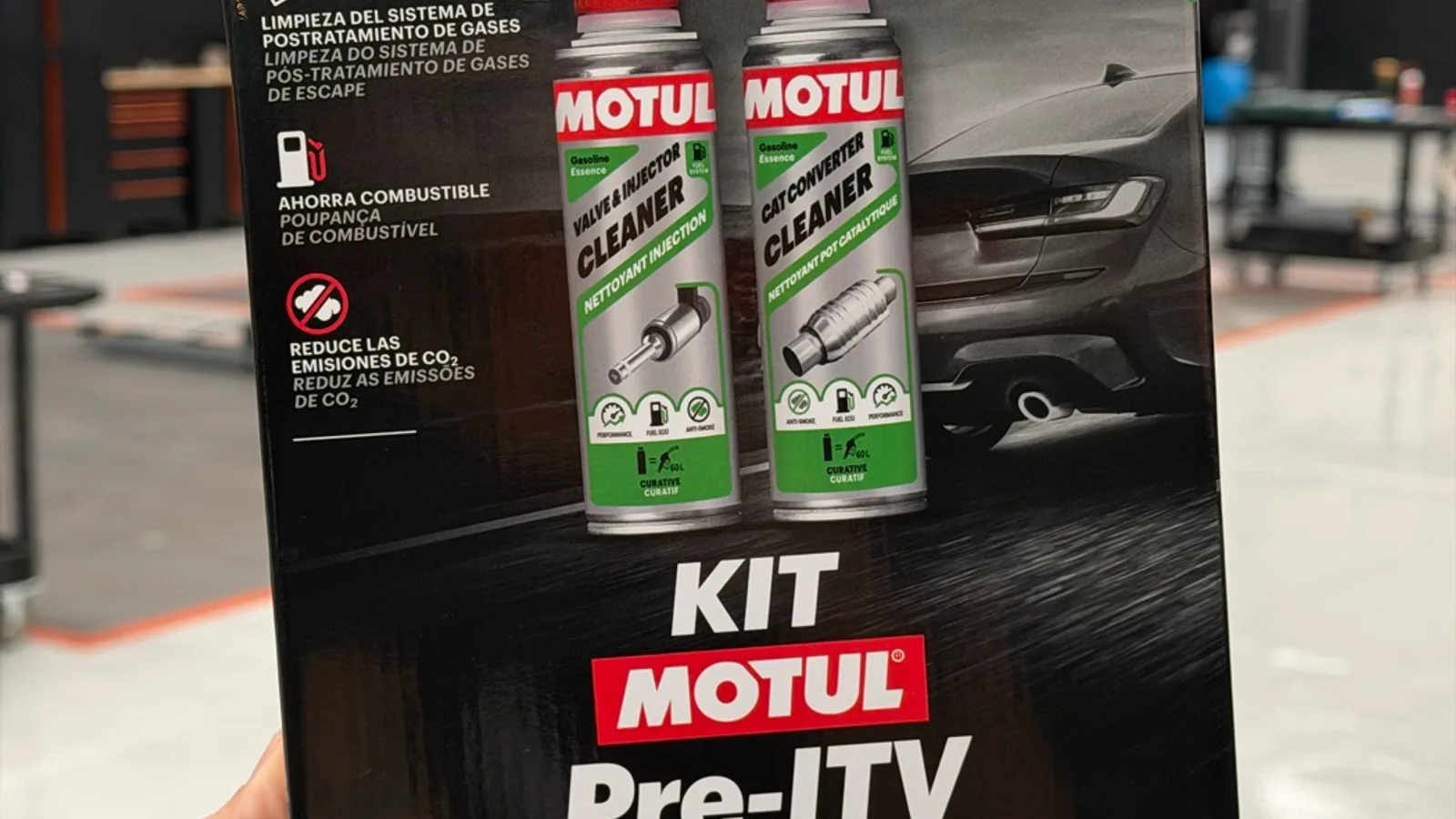
It’s a two-additive pack from Motul designed to deep-clean — a curative treatment — right before the inspection. It’s not a «quick patch»: it genuinely works on the fuel system and on the exhaust after-treatment. There are two versions depending on your engine, and each one carries the two cleaners that type of engine needs.
| Version | Cleans the fuel side | Cleans the after-treatment | For which engine |
|---|---|---|---|
| Petrol | Valve & Injector Clean Petrol | Cat Converter Cleaner (catalytic converter + lambda sensors) | Petrol with catalytic converter |
| Diesel | Valve & Injector Clean Diesel | DPF Cleaner (particulate filter + SCR) | Diesel with particulate filter (DPF) |
How it works, step by step, inside the engine
Cleans injectors and valves
It dissolves and flushes the deposits fouling the injectors, so they atomise fuel precisely again.
Restores the air/fuel mix
With clean injectors, the amount of fuel is right again and combustion is more complete.
Cleans the exhaust after-treatment
On petrol it decarbonises the catalytic converter and lambda sensors; on diesel it improves particulate-filter (DPF) regeneration.
Fewer emissions, better running
The engine burns better: it regains response, lowers consumption and, above all, cuts the emissions the ITV measures.
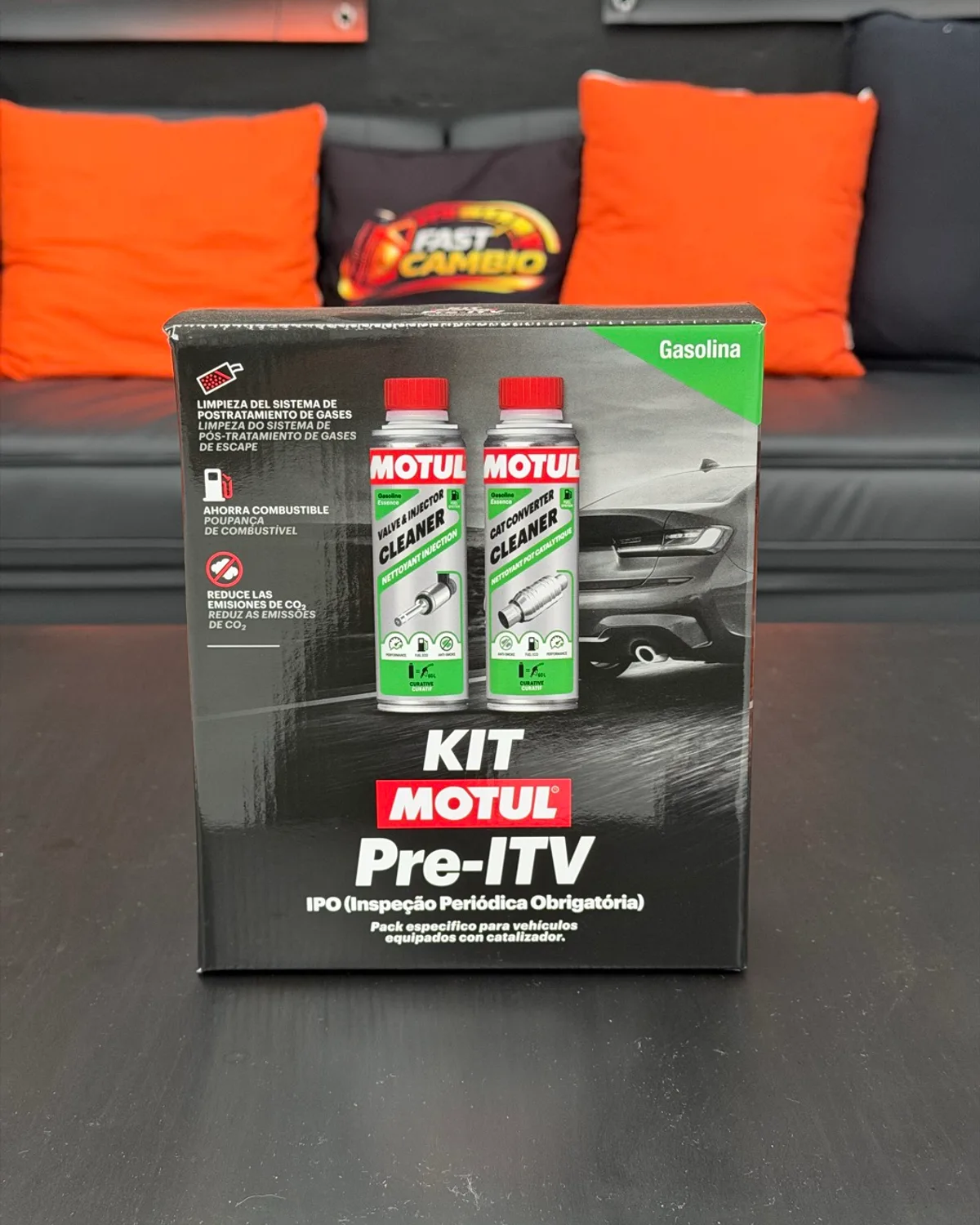
The key is the after-treatment: this is where petrol and diesel differ
On petrol, the Cat Converter Cleaner dissolves the carbon built up in the catalytic converter’s honeycomb and on the lambda sensors. And this matters more than it seems: a clean lambda sensor reads the mixture correctly again, and with that correct reading the engine’s ECU re-adjusts the air/fuel ratio. It’s literally the condition for the gas test to come out within range.
On diesel, the DPF Cleaner is designed for engines with a particulate filter (DPF) and SCR systems. It improves the efficiency of the DPF’s dynamic regeneration —the process where the filter self-cleans by burning off soot— and even helps clean the turbine and the turbo’s VGT system. It’s especially useful on city cars that do short trips and often never reach the temperature to regenerate properly.
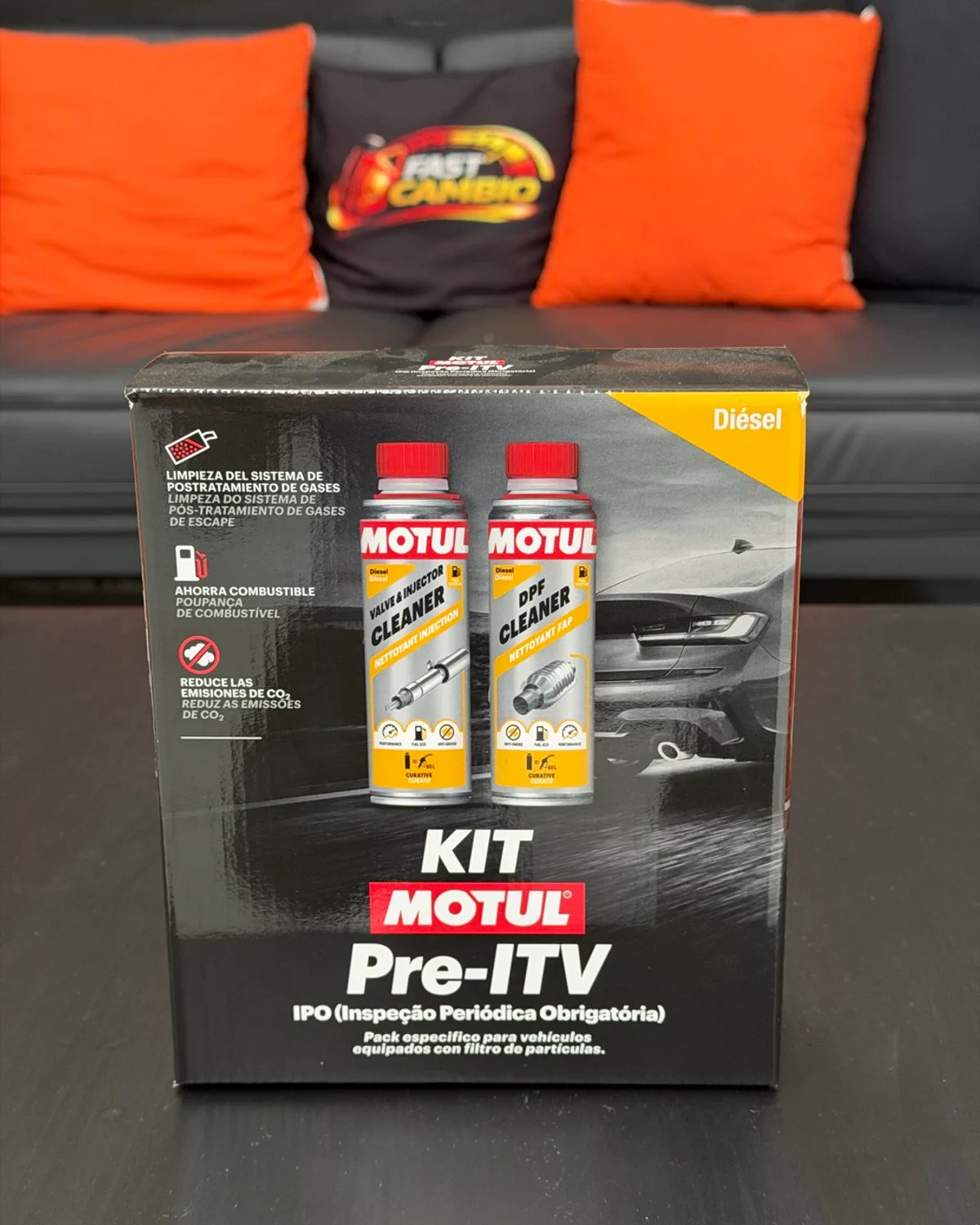
What you actually notice (beyond the ITV)
A clean engine shows in everyday driving
- Fewer pollutant emissions at the exhaust
- Regains power, response and acceleration
- Lowers fuel consumption
- Smoother starting and running
- Less smoke, especially on diesel
- You reach the gas test with margin to spare
How it’s applied (and why always «before refuelling»)
Both additives go into the fuel tank, right before you refuel. Why before? So the stream of petrol or diesel as you fill mixes the product evenly through the whole tank. From there, you just drive normally: the additive does its work mile after mile as the fuel passes through injectors, combustion chamber and exhaust. According to the pack itself, it’s applied across fuel tankfuls, and Motul notes that both products can be applied at the same time.
Curative treatment + maintenance
The Pre-ITV is a curative (shock) treatment to deep-clean before the inspection. Afterwards, to keep the engine in shape, Motul recommends repeating the treatment roughly every 8,000 km.
When it makes sense to use it
A good time for a Pre-ITV
- Before the ITV, especially if the last one was tight on gases
- If you notice higher consumption than usual
- If your diesel smokes black or has lost pull
- Hesitation, power loss or rough idle
- The anti-pollution or engine light has come on
- City car with lots of short trips (a DPF that won’t regenerate)
- As preventive maintenance, every 8,000 km
When NOT to expect miracles (let’s be honest)
An additive is no substitute for a repair
The Pre-ITV Kit cleans and optimises, but it won’t bring a dead part back to life. If the catalytic converter is burnt out, the particulate filter clogged to the limit, a lambda sensor faulty or there’s a mechanical fault (compression, EGR, turbo), the additive won’t fix it: that needs repairing. Promising you’ll «pass the ITV for sure» with one bottle would be lying to you.
One more nuance: the petrol injector cleaner is particularly suited to indirect-injection and carburettor engines. That’s why we don’t use it «blind»: we check your car and confirm whether the kit is right for your engine first.
Why we do it with your plate and in plain sight
With your plate we confirm whether your car is petrol with a catalytic converter or diesel with a particulate filter, and which version of the kit it needs. It’s the same philosophy as always at Fast Cambio: we explain what your car takes and why, with no appointment and full transparency. And if it’s also worth checking the filters or the engine oil, we’ll tell you without any pressure.
2
additives: fuel + after-treatment
~8,000 km
to repeat as maintenance
No booking
walk in, get served
Prepare for the ITV with margin, not the day before
The additive needs miles to work, so the ideal is to add it a few days before the inspection, not on the way to the test centre. If your ITV is near, message us on WhatsApp with your plate or drop by with no appointment at Calle Ceramistas 13, Málaga: we’ll confirm the right version for your car and prepare your engine to reach the gas test at its best.
Key takeaways
- The ITV measures exhaust gases; a dirty engine can fail even if it «drives fine»
- The Pre-ITV Kit cleans injectors and valves + the after-treatment: cat (petrol) or DPF (diesel)
- It goes in the tank before refuelling; it’s a curative treatment, repeated every ~8,000 km
- It’s no substitute for a repair: if a part is faulty, it gets fixed
- We confirm the right version by plate, no appointment and in plain sight
Frequently asked questions
Does the Motul Pre-ITV Kit guarantee passing the ITV?
No, and anyone who promises that isn’t being honest. The kit deep-cleans the fuel system and the exhaust after-treatment, which greatly helps the emissions test come out within range. But if there’s a real fault (a worn-out cat or DPF, a failed lambda sensor, a mechanical issue), that has to be repaired.
How do I know if I need the petrol or diesel version?
By your engine type: the petrol one cleans the catalytic converter and lambda sensors; the diesel one cleans the particulate filter (DPF). With your plate we confirm which is right for your car.
When should I apply it before the ITV?
Ideally a few days before and driving normally, so the additive travels through the system and takes effect. Adding it on the way to the test centre leaves little time for it to work.
Does it work for cars with a particulate filter (DPF)?
Yes. The diesel version includes a specific DPF Cleaner, designed for engines with a particulate filter and SCR systems. It improves DPF regeneration, which is very useful especially on city cars.
How often can I use it?
As a maintenance treatment, Motul recommends applying it roughly every 8,000 km. Beyond the one-off use before the ITV, it’s a good habit to keep injectors and exhaust clean.
Is it compatible with any car?
The diesel version suits all diesel engines. On petrol, the injector cleaner is particularly suited to indirect injection and carburettor, so we confirm by plate before applying it. We never use it «blind».